This post summarises a grower report published by HortiDaily. It is largely based on comments from the grower and from the supplier of the water treatment system, so read the claims as practical experience rather than independent trial results.
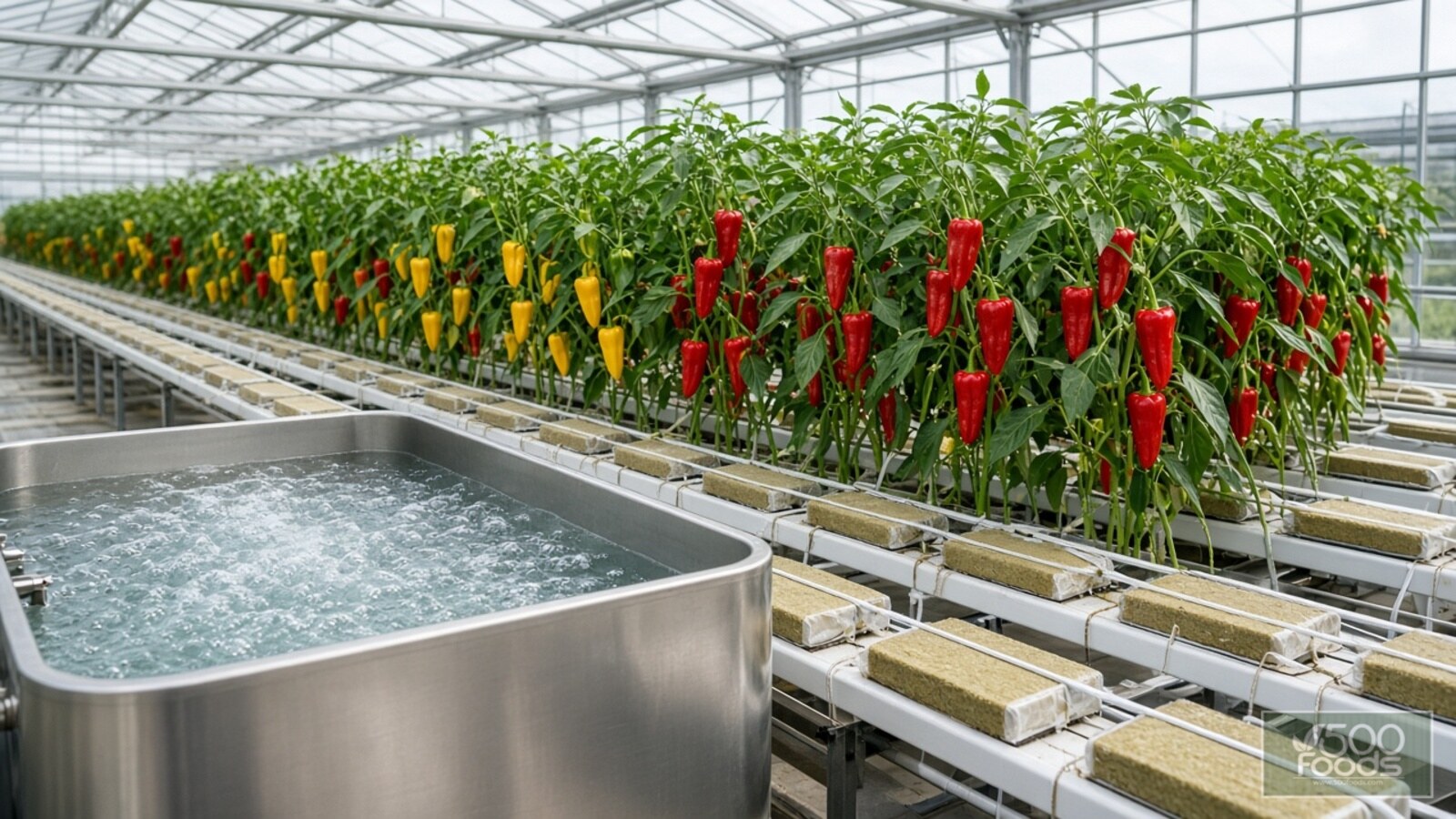
Most greenhouse growers who recirculate drain water lean on UV lamps or hydrogen peroxide to keep pathogens in check. Frank Bakker of Bakker Sweet Peppers in the Netherlands has done without both for seven years. According to a report in HortiDaily, his pepper crop has been irrigated through an oxygen-based treatment unit, the Vital Oxidizer from Dutch supplier JVR Tecmar, and he says he is satisfied with the outcome.
Seven years, not seven weeks
For Bakker the system is no longer an experiment. He says the operation runs without UV and without peroxide and that he is happy with the results. John van Ruijven, who runs JVR Tecmar, argues that the duration is the point. A short trial can show good numbers for a few weeks, he notes, whereas seven seasons in a commercial pepper crop gives a fuller picture of how a water system behaves over time. A Dutch-language trade report from late 2023 described the same grower investing in water quality after he felt the crop had lost some vigour, which suggests the experience has been building for a while.
Feeding the microbes rather than killing them
The thinking behind the unit differs from conventional disinfection. Instead of trying to strip as much microbial life as possible from recirculated water, the aim is to keep dissolved oxygen high and water quality stable so that an aerobic microbial community can establish itself. Van Ruijven points out that roots never grow in sterile conditions and always carry their own microbiome. Because drain water flows back into the system, the company says water, oxygen, microbes and roots need to be managed as one connected whole rather than treating pathogens in isolation. JVR Tecmar's own material also positions the unit as an alternative to chlorine and ozone.
What the measurements show
Over several days, readings were taken in a clean water basin and in a daily supply basin at the farm, using several sensors from Yookr alongside a handheld meter. In the clean water basin, three dissolved oxygen sensors averaged roughly 9.35 to 9.43 mg/l across four measurement points, with handheld readings between 9.1 and 10.3 mg/l. In the supply basin, two sensors averaged about 9.6 to 9.8 mg/l while the handheld meter read 8.4 to 9.0 mg/l. The tests also logged pH, temperature and turbidity. JVR Tecmar is working with Kytos to look more closely at water quality and at the microbiome in drain water and around the roots.
An important caveat comes from the report itself. The measurements were set up mainly to compare sensors with one another in practical conditions, and gaps between sensor and handheld readings are not presented as proof of how the oxidizer works. High dissolved oxygen is consistent with the approach, but on its own it does not demonstrate disease control.
Why it matters for growers
Disinfecting recirculated water is a significant cost and a standing concern in closed greenhouse systems, so any long-running alternative will draw interest. Van Ruijven says the next step is to pair grower experience with data on how the microbiome develops in the water, drain and root zone, and to link the system to crop resilience. Until that microbiological data is published, this remains one grower's well-documented satisfaction, which is a useful signal but not a controlled comparison.
References:
- Pepper grower reports seven years of using oxygen-based water treatment, HortiDaily (30 October 2026), grower and supplier report
- Paprikateler investeert in waterkwaliteit, Groentennieuws (21 December 2023), in Dutch
- JVR Tecmar, supplier website (Vital Oxidizer)
How we find, write and illustrate these stories, and how you can share them: see Welcome to Ag Articles.
AI-generated post text and image content are shared under CC BY 4.0.