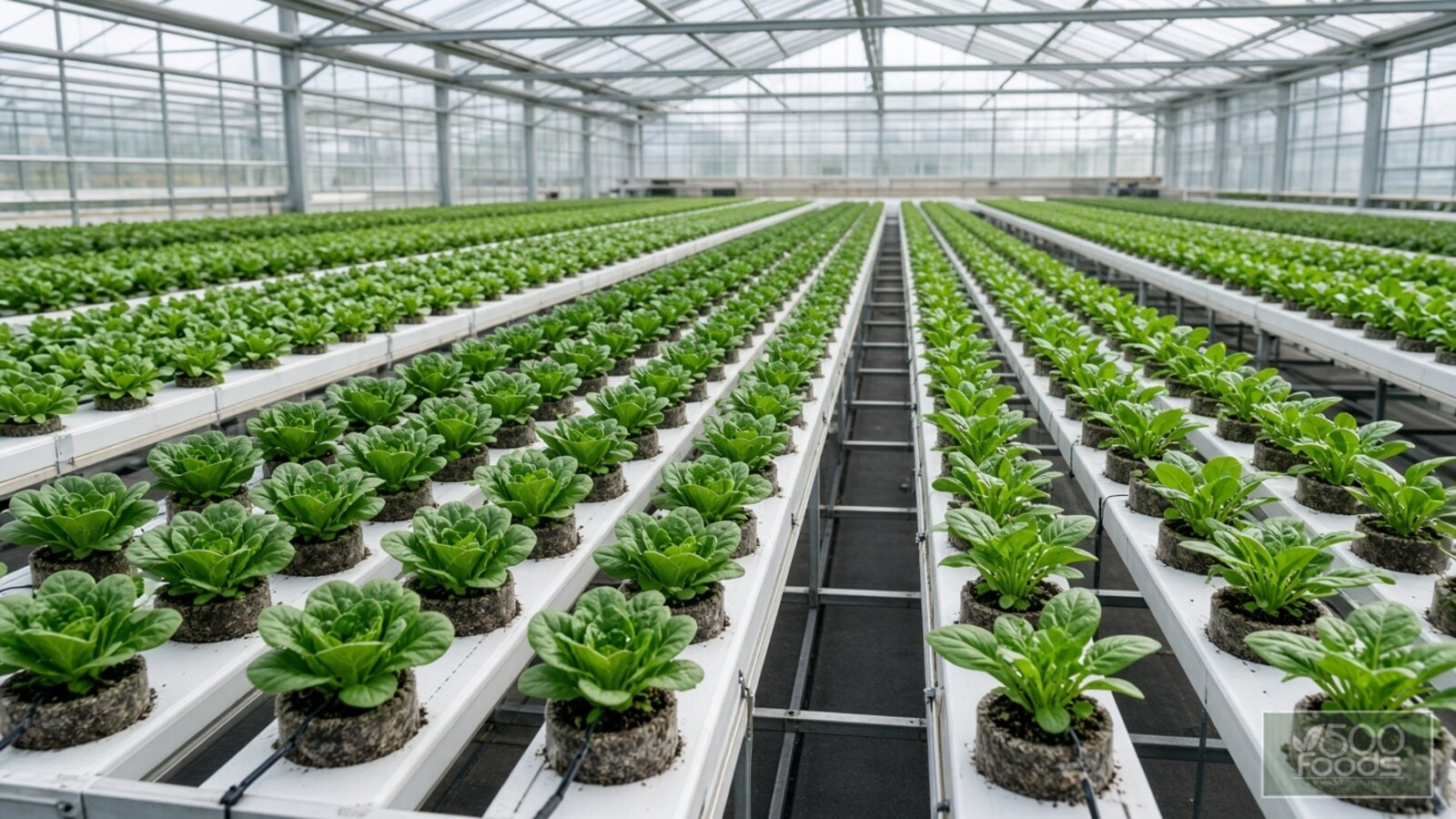
Lamb's lettuce and spinach are usually thought of as field or soil-greenhouse crops: small, fussy, low-value per plant, and harvested in huge numbers. A Belgian-Dutch research group has spent 2026 asking whether they can be grown at high density in hydroponics instead. As Vertical Farm Daily reports, the Leafy Hydroponics Consortium has now finished its first six trials, and the questions it is testing are the same ones any container grower runs into.
Who is involved
The consortium is led by Dutch cultivation consultancy Cultivators, working with Harvestis, the vegetable research centre in Sint-Katelijne-Waver, Belgium, and a group of industry suppliers covering genetics, growing media, lighting, irrigation and greenhouse engineering. The trials ran in Harvestis greenhouses on a high-density sleeve system mounted on a mobile gutter system, where gutters of plants move along rails rather than sitting on fixed benches.
What the first six trials tested
The work started with lamb's lettuce (also called mâche or corn salad) and later moved to spinach. Across the trials the team compared:
- Growing media: peat against stone wool in the sleeves.
- Irrigation: how watering strategy affects growth, leaf quality and root development.
- Varieties: how different genetics respond to the same system.
- Add-ons: water treatment, nutrient recipes, biological crop-support products and seed treatments, both commercial and still in development.
No yields, cycle times or cost figures have been published yet. The consortium describes this phase as building experience and sharpening the questions for the next round, which will add more crops and techniques. That is a fair caution: six trials on two crops is a start, not a verdict.
Why these crops are hard
Baby-leaf crops are a tough fit for hydroponics. They are sown thickly, grow fast, and are sold by weight at low prices, so any system has to handle very high plant counts with little labour per plant. Spinach in particular is known for root disease in warm recirculating water, which is why water treatment and biological products feature in the trial list. Lettuce heads and herbs dominate indoor farming partly because they avoid some of these problems.
If a dense sleeve-and-gutter approach makes lamb's lettuce and spinach reliable without soil, it widens the crop list for every closed growing system, not just glasshouses.
What container growers can take from it
Most of the variables here map directly onto a shipping-container farm. Substrate choice affects cost per plant, waste handling and how much water the root zone holds. Irrigation strategy matters even more in a small sealed space, where a mistake affects the whole crop at once. And seed treatments and water hygiene are the cheapest insurance against losing a full cycle to root rot.
The mobile-gutter idea is also worth watching. Moving plants to the worker, instead of leaving aisles for people to walk down, is how a glasshouse packs in more growing area. The same logic drives aisle-less container designs, where racks move and labour is done at one station. Those are central to the 500 Foods vision of many standard containers on one site with centralized labour.
When the consortium publishes numbers on yield per square metre, cycle length and root health by substrate, they will be useful benchmarks for anyone pricing leafy greens grown in containers. Until then, it is a useful checklist of what to test.
How we find, write and illustrate these stories, and how you can share them: see Welcome to Container Culture.
AI-generated post text and image content are shared under CC BY 4.0.