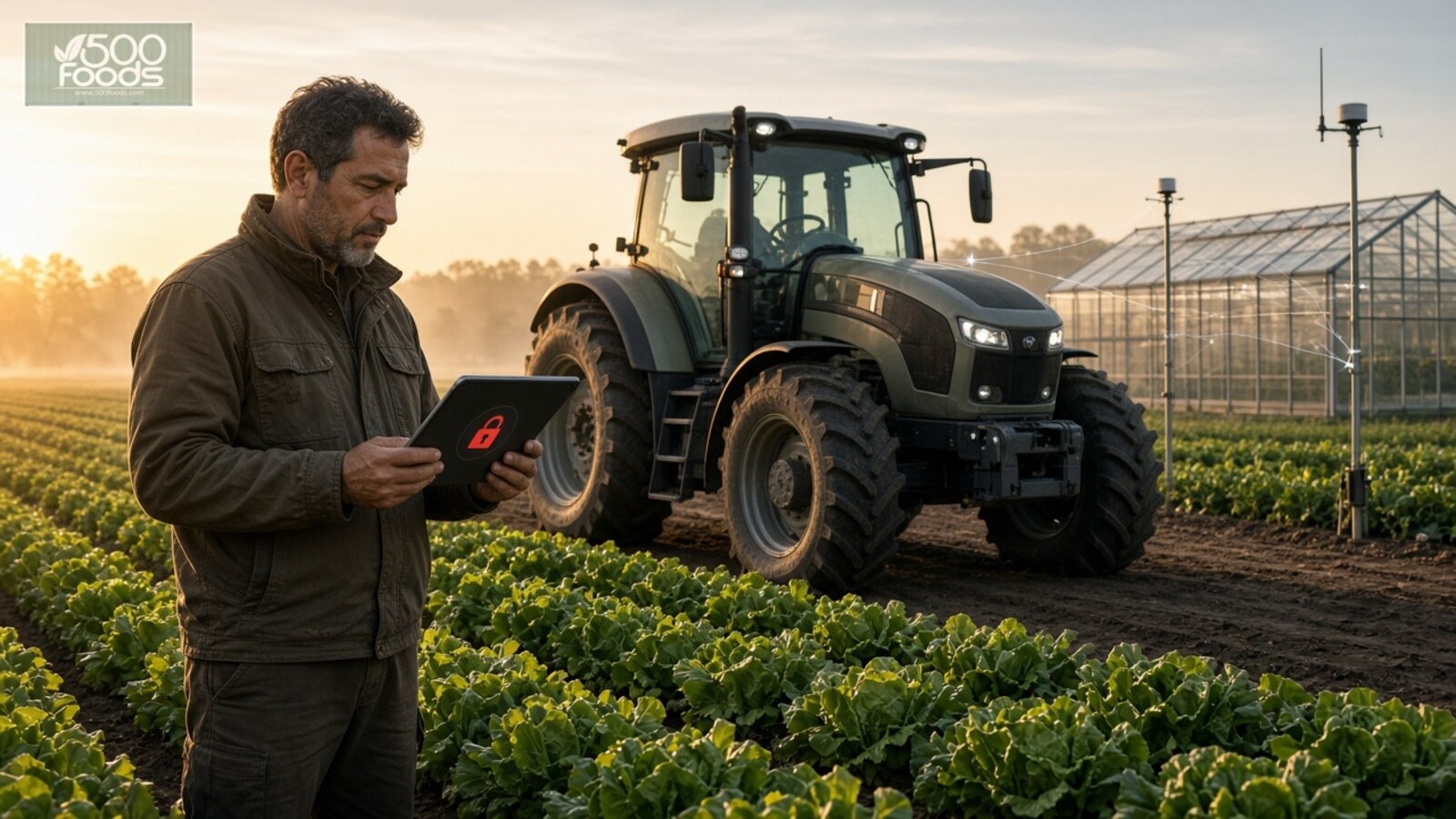
When unexplained cyberattacks disrupted several leading French supermarket chains this autumn, the damage was felt far beyond the checkout. The Food and Ag-ISAC, a nonprofit that shares threat intelligence across the food sector, says the incidents should be a warning for every grower, packer, distributor and retailer, whatever their size. Its message is simple: attackers rarely care who you are, only whether your systems are easy to open.
Ransomware is climbing
According to the group's latest State of the Threat report, food and agriculture recorded 227 ransomware incidents through July, compared with 140 over the same months of 2025, an increase of about 62%. That places the sector eighth among industries targeted by ransomware, with roughly 5% of all attacks. The report expects this year to rank among the heaviest on record for ransomware overall.
Importantly, the analysts do not believe food companies are being singled out. Most campaigns are opportunistic and largely automated. Criminal groups scan the internet for exposed or unpatched systems, or send phishing emails, and then exploit whichever organisation responds first. The same gangs that hit hospitals and manufacturers are hitting food and agriculture.
Why produce businesses are exposed
A decade ago, many farms could reasonably assume they were too small or too offline to interest criminals. That assumption no longer holds. Self-driving tractors, irrigation controllers, cold-room sensors, packhouse software and cloud-based greenhouse climate systems all connect to networks. Each new device adds convenience, but it also adds another door that must be locked and maintained.
The produce trade has two further weaknesses. First, most businesses are small and lack dedicated IT staff, so a known flaw can sit unpatched for months. Second, fresh produce moves on tight, just-in-time schedules. If an attacker freezes ordering, labelling or temperature monitoring for even a few days, perishable stock can be lost and store shelves can empty. The harm is therefore not only financial and reputational; it can also affect public access to safe food.
Practical, low-cost defences
The good news is that the most effective protections are neither exotic nor expensive. The Food and Ag-ISAC recommends:
- Multi-factor authentication on email, banking, cloud tools, inventory and logistics platforms, and remote access. Microsoft research suggests MFA cuts the risk of account compromise by more than 99%, and phishing-resistant options such as FIDO2 keys and passkeys are stronger still.
- Prompt patching of software and device firmware, including equipment in the field and the cooler.
- Changing default passwords on every new sensor, camera or controller before it goes online.
- Staff training so employees can recognise phishing and social-engineering tricks, since people are often the easiest entry point.
- Managed security services, which have become more affordable and can audit software, keep systems updated and watch network traffic for a modest fee.
For a small grower, a sensible first step is an inventory: list every connected device and account, note who can access it, and check that each one has a unique password and current updates. Keeping an offline backup of key records, and a paper plan for running harvest and shipping without computers, can turn a crisis into an inconvenience. Cybersecurity is now part of food safety and supply reliability, just like cold-chain control.
Source: Recent agrifood cyberattacks are 'a wakeup call' for the industry as ransomware incidences increase, AgFunderNews (2026-10-22)
References:
- Food and Agriculture Information Sharing and Analysis Center (Food and Ag-ISAC), State of the Threat reports
- How effective is multifactor authentication at deterring cyberattacks?, Meyer et al., Microsoft (2023)
- More than a Password: Multifactor Authentication, US Cybersecurity and Infrastructure Security Agency
How we find, write and illustrate these stories, and how you can share them: see Welcome to Ag Articles.
AI-generated post text and image content are shared under CC BY 4.0.