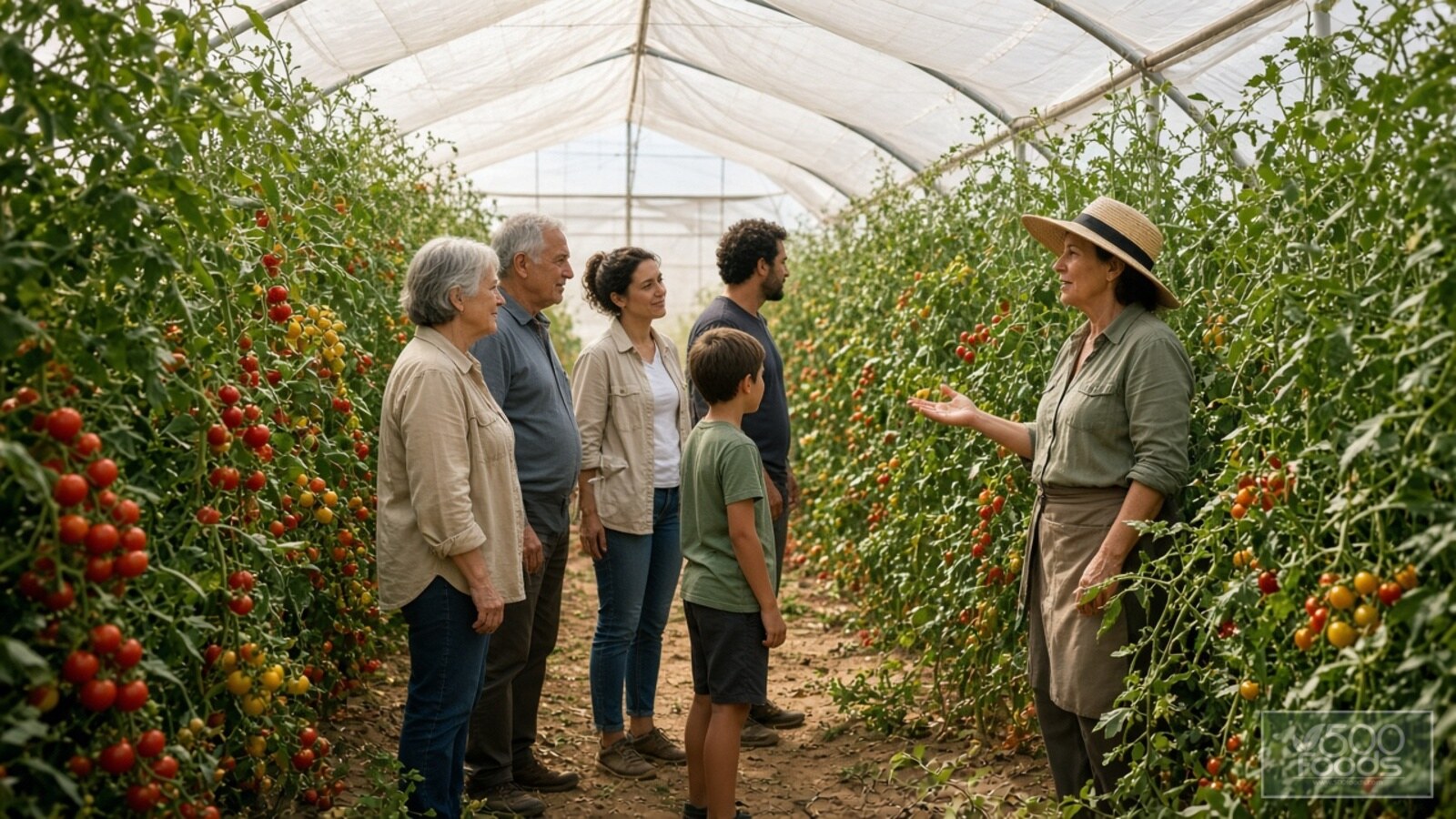
A family greenhouse farm in Almería, Spain, has spent 25 years selling something no certification label can provide: a chance for customers to see exactly how their food is grown. Clisol now hosts about 15,000 paying visitors a year, and its story offers useful lessons for small farms that build trust directly rather than through a logo.
HortiDaily recently profiled Clisol Turismo Agrícola, run by Lola Gómez Ferrón and her husband in the Poniente district west of Almería city. The area is famous for its "sea of plastic," a vast patchwork of greenhouses that the regional government puts at about 33,000 hectares. Clisol is tiny by comparison: 2.2 hectares across two sites, growing mainly cherry tomatoes, pointed peppers and mini peppers in substrate. Yet it has become one of the best-known windows into how the region feeds much of Europe.
From free walk-throughs to a paid product
The tours began by accident. The farm sits between two holiday towns, and in the 1990s passing cyclists, families and eventually tour buses stopped to ask what was happening under the plastic. Gómez showed them around for free until the flow of buses became too large to absorb. Deciding to charge for visits was, in her telling, the real turning point.
A second lesson came from a hotel marketing director, who interrupted her early explanations to say she was speaking a different language. She learned to describe biological pest control, irrigation and climate management in plain terms that hold an audience's interest. The tour business officially launched in June 2001 but did not turn a profit until about 2007 or 2008. Gómez says the hardest investment was not buildings but knowledge: training in hospitality, languages and storytelling that took years to build.
Three audiences, one farm
Clisol now serves three markets. Tourists take a two-hour visit that ends with tasting tomatoes from among 18 varieties. School groups, from preschoolers to university students, have been welcome since the business's third year. Professional visitors, such as cooperatives, journalists, researchers and buyers from East Asia, come in smaller numbers but pay more for tailored itineraries. Gómez notes that a two-person technical visit can earn more than a full bus of tourists, although it needs days of preparation with specialist agronomists.
Trust without a label
For Better Than Organic readers, the interesting part is how Clisol earns credibility. Its marketing is mostly word of mouth among teachers and past visitors. More recently, her son replaced phone and email bookings with an online booking engine and set up automatic requests for Google reviews. Since then, visits from individual guests have grown, and five-star ratings keep bringing in new customers. Public reviews work like a crowd-sourced audit: anyone can read what earlier guests saw, smelled and tasted.
This matters because many Almería growers already use the practices that shoppers often link with organic farming. Regional data show that biological pest control, using beneficial insects instead of most sprays, covers about 57% of the province's greenhouse vegetable area and nearly all of its peppers. A certificate cannot easily tell that story, but an open greenhouse door can.
The model is not effortless. Gómez spends about 70% of her time on outreach, the farm employs nine people, and family members handle accounts, online orders and social media. She estimates the farm could host ten times as many visitors. For a small farm weighing the cost and paperwork of certification, Clisol shows that transparency, patience and good storytelling can become a product of their own.
References:
- La campaña hortofrutícola 2024/2025 alcanzará en Almería los 3.716M€ en exportación, Junta de Andalucía, Consejería de Agricultura (2025)
- Invernaderos de Almería, de 1963 a 2025, una historia exitosa de agricultura familiar basada en el esfuerzo, Hortoinfo (2025)
How we find, write and illustrate these stories, and how you can share them: see Welcome to Better Than Organic.
AI-generated post text and image content are shared under CC BY 4.0.