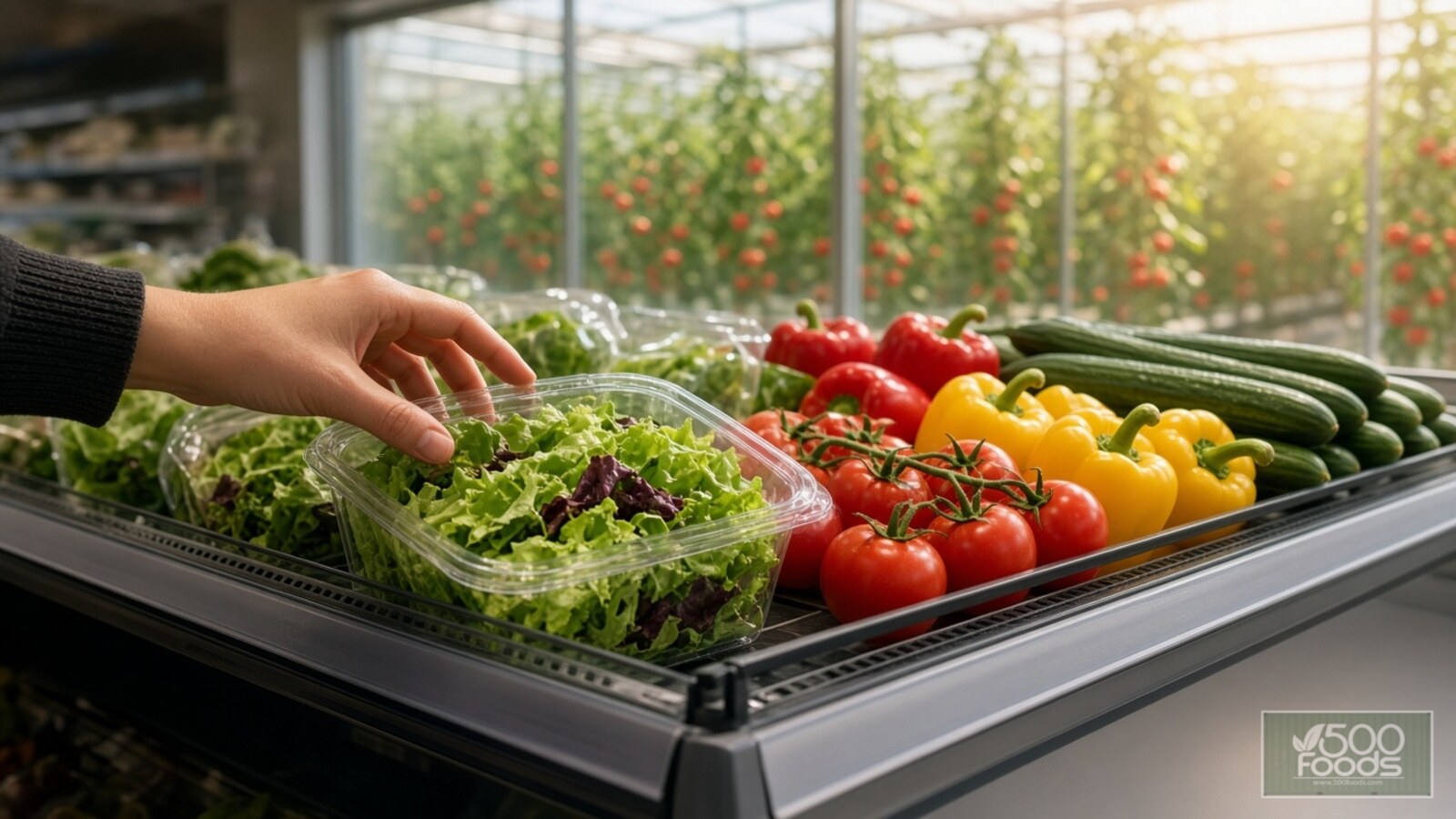
Greenhouse-grown vegetables are winning a bigger share of the US produce aisle, and this year's record Cyclospora outbreak may be speeding that up. A new State of Greenhouse Agriculture report from Cox Farms, a US greenhouse grower, pulls together retail scanner data, government trade figures and shopper surveys to argue that indoor-grown produce is where most of the category's growth now comes from.
Where the growth is
Using NielsenIQ retail data, the report finds that greenhouse tomatoes, cucumbers, peppers and packaged salads all grew faster year over year than their field-grown equivalents. Packaged salads show the sharpest split. Between August 2025 and August 2026, greenhouse salads rose 27.4% while field-grown salads fell. Greenhouse products still make up only about 8.7% of packaged salad sales, yet they accounted for all of the category's net growth.
That pattern matters because overall produce sales have been fairly flat. Vine crops such as tomatoes, peppers and cucumbers are already a mature greenhouse business. Leafy greens and berries are the next frontier, and retailers are looking for suppliers who can deliver steady volume and quality every week of the year. Much of today's US greenhouse supply is imported, with Canada and Mexico the leading sources, so trade policy, freight and energy costs all affect what lands on the shelf.
The outbreak effect
The 2026 cyclosporiasis outbreak, linked to iceberg lettuce grown in Mexico, sickened thousands of Americans and became one of the year's biggest produce stories. Numerator survey data cited in the report shows that at the July peak, 87% of produce shoppers had heard of it. Among those aware, 69% were worried and 58% changed how they bought fresh produce.
Retail figures point the same way. Stores with more greenhouse items in their packaged salad range were already doing better before the outbreak, and they saw smaller sales drops afterwards than stores with thinner greenhouse assortments. One industry analyst quoted in the report noted that a single scare can hurt a whole category, because shoppers rarely separate one crop, growing method or region from another.
Reading the numbers carefully
Two cautions apply. First, the report comes from a greenhouse company, and it interprets licensed data that outsiders cannot easily check. Second, the retailer comparison shows an association, not proof that greenhouse growing prevented illness or caused shoppers to switch. Pricing, store mix and promotions could explain part of the gap. Greenhouses also reduce some risks, such as contaminated irrigation water and wildlife, but they still depend on good hygiene, clean inputs and careful handling to keep produce safe.
An awareness gap
Perhaps the most useful finding for marketers comes from a Morning Consult survey commissioned for the report. Only 59% of consumers said they were familiar with greenhouse-grown produce, compared with 98% of industry respondents. Many shoppers could not tell whether a brand they bought was grown indoors or in a field.
The report's advice is to sell outcomes rather than technology: freshness, consistent quality, food safety, local supply and year-round availability. For growers and buyers, the takeaway is that the next phase of greenhouse growth will depend on three things: earning consumer trust, keeping shelves productive, and proving supply is reliable when field crops falter.
References:
- State of greenhouse agriculture: Safety and supply dynamics drive continued greenhouse growth, Cox Farms (12 October 2026)
- State of Greenhouse Agriculture report (PDF), Cox Farms
How we find, write and illustrate these stories, and how you can share them: see Welcome to Ag Articles.
AI-generated post text and image content are shared under CC BY 4.0.