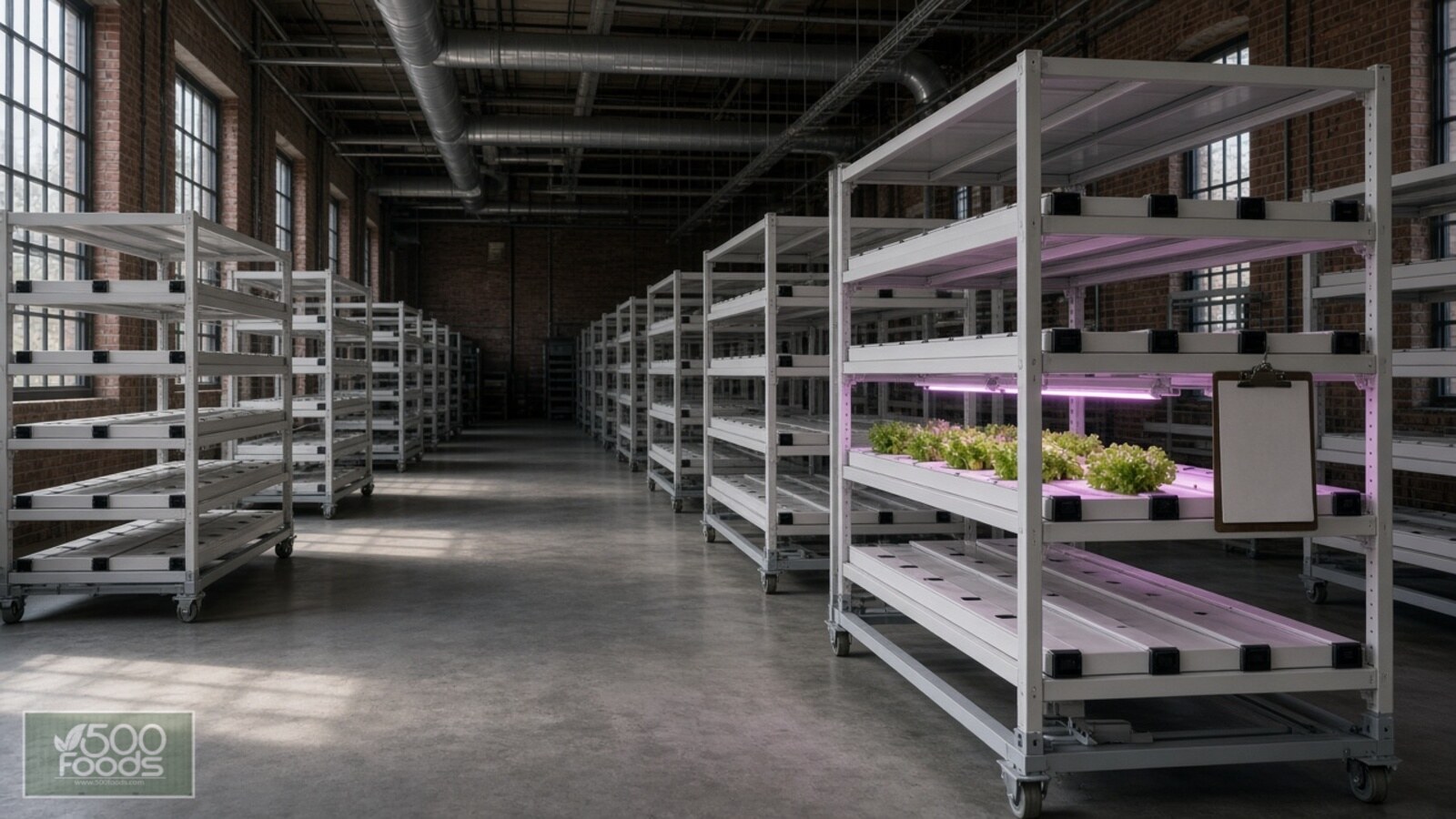
Planted Detroit, which grew into Michigan's largest vertical farm after starting up in 2018, will stop operating in November. Its whole campus in the city's East Industrial corridor is now heading to a sealed-bid sale run by SecondBloom Auctions: land, buildings and a commissioned indoor-farming and food-processing plant, offered as one package. For anyone weighing an indoor farm, the sale is a useful test of a question the industry rarely answers in public: what is built-out growing capacity actually worth once the original business is gone?
What is on the block
According to the auction listing, the offer covers two renovated, sprinklered industrial buildings totalling 37,637 square feet on 1.49 acres, with roughly 28,000 square feet of growing canopy inside. The company put about US$16.9 million in gross assets into the site between 2019 and 2023. That includes two automated nutrient film technique (NFT) racking systems, 98 mobile vertical grow racks, a nursery, a harvest room, food-grade processing space, cold storage, grow-room climate control and standby power. The farm also holds USDA Harmonized GAP Plus+ food-safety certification, which normally takes a new operator time and paperwork to earn.
The auctioneer's pitch is speed: a buyer gets a working farm without a two-year build, and the fit-out would cost many times the real estate value to replicate. The catch is that replacement cost and resale value are different numbers. Industrial zoning that allows food processing, warehousing and lab uses, plus an Opportunity Zone tag, means the land and shells will draw bidders who have no interest in growing lettuce.
A pattern, not a one-off
Detroit is not the first such sale this year. In April, SecondBloom ran a 500-plus lot online auction of equipment from Eden Green Technology's vertical farm in Cleburne, Texas, a business that had supplied hundreds of Walmart stores before it closed in December 2025. That sale broke the farm into lights, chillers, controls and seeding lines. The Detroit offer goes the other way, selling everything in place in the hope that someone wants a turnkey farm.
Which approach finds the better price will be worth watching. If whole-site bids come in near the real estate value, the market is saying that custom indoor-farm infrastructure is worth little to a second owner. If a grower pays a premium for a commissioned, certified site, it suggests there is real value in skipping the build.
Why it matters for container growers
The deeper lesson is about how capital gets locked in. A large, purpose-built vertical farm puts much of its investment into fixtures fitted to one building and one business plan. When the plan fails, that money is hard to move. Standard shipping-container farms work differently: each unit is a self-contained, transportable asset with an established resale market, and capacity can be added in steps as sales grow rather than all at once.
Containers do not escape the hard parts of indoor farming. Energy, labour and pricing still decide whether a farm survives. But staging growth in standard units limits how much can be stranded at once, and keeps the exit value closer to the cost. That is part of the case for many standardized containers on one site rather than a single giant build-out.
References:
- SecondBloom Auctions (Planted Detroit campus listing)
- SecondBloom Auctions launches 500+ lot online liquidation of Eden Green Technology vertical farming facility in Cleburne, Texas, PRWeb (April 2026)
How we find, write and illustrate these stories, and how you can share them: see Welcome to Container Culture.
AI-generated post text and image content are shared under CC BY 4.0.