This post summarises a first-person essay published by Civil Eats. The experiences and views in it are the author's own.
After 18 years of growing food in Northern California, Caiti Hachmyer has a message for people thinking about starting a small farm: be honest about the money. In an essay for Civil Eats, the founder of Red H Farm describes how the work wore her down, how she rebuilt her farm around her health, and why she thinks the farming community should talk more openly about how farms really pay their bills.
A start built on help
Hachmyer began farming in 2009, at 25, as the Great Recession shrank other options. She is candid that she started with advantages. She grew up on an acre of land, a neighbour lent a tractor, seeds came at a discount and a local café agreed to buy produce. Her first crop was a 50-foot row of radishes. From there she moved to a small CSA, selling $20 bags, and then to a farmers market. For years, tips from waitressing covered her living costs while the farm itself did not turn a profit.
The hidden subsidy
By 28 the physical toll was showing. She took two seasons away to complete a master's degree in urban and environmental policy and planning, focused on food systems, on the East Coast. Back home, she dropped the CSA and relied on market days that brought in roughly $1,200 to $1,500 each. She describes living on about $30,000 a year as a single person by keeping costs low. Teaching agroecology at Sonoma State University, hosting farm education, organising a 2016 symposium on women's leadership in food, running mutual aid during COVID and mentoring through Agroecology Commons filled out the rest of her working life.
The essay's central point is about off-farm income. Hachmyer notes that, on average, US farm households get about 80% of their income from work off the farm. In her view this is rarely mentioned to people who want to start farming, and the silence makes newcomers feel that they are failing when the problem is the economics.
When the body says no
Hachmyer writes that she routinely worked 80 to 100 hours a week. After the 2021 California drought, she reached a breaking point in 2022, with a health crisis that included facial flushing, sensitivity to heat and sun, and deep exhaustion. A friend put it plainly: your values will not make you stop, but your body will.
A smaller, different farm
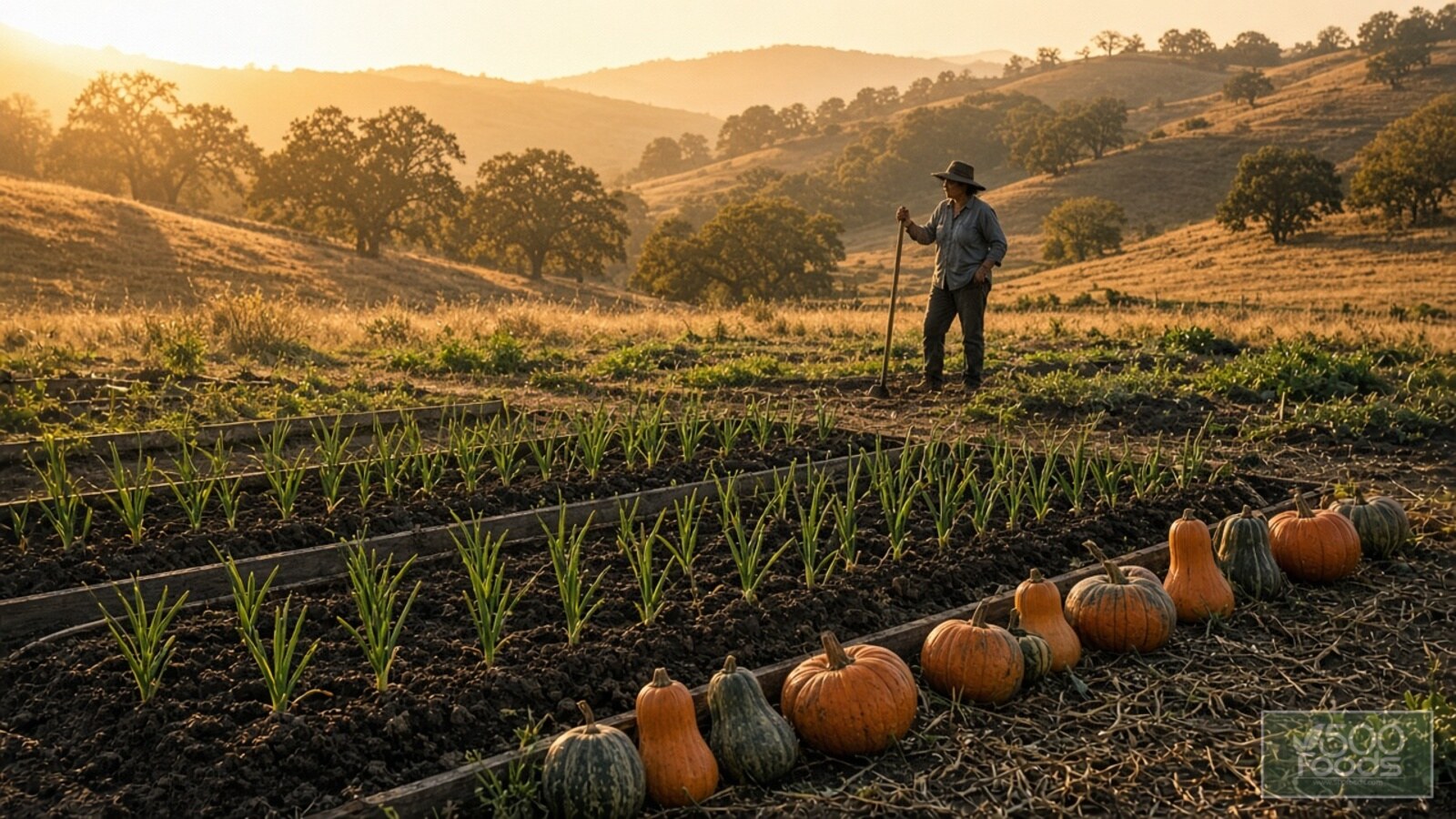
Rather than quit, she changed the farm. She left the summer market and shifted to crops that store and sell through the winter, such as squash, onions, polenta corn, dry beans, herbs, chilies and garlic. She accepted earning less from farming and doing more academic research, including a funded three-year study of the ecological, financial and emotional realities of small farms. She has since founded the Center for Just and Resilient Food Systems at Sonoma State, where she will be director and where a food systems minor is planned.
What she asks of the community
Hachmyer closes by asking farmers and educators to tell newcomers the truth: that fully supporting yourself from a small farm is nearly impossible for most people, even if some manage it. She calls for more transparency about income, for farmers to mentor one another, and for wider recognition that good land stewardship and a balanced life do not have to depend on running the farm as a business alone. Her account is one farmer's experience, but the off-farm income figure suggests it is far from unusual.
References:
- Confessions From a Farmer on the Edge, Caiti Hachmyer, Civil Eats (28 October 2026), first-person essay
How we find, write and illustrate these stories, and how you can share them: see Welcome to Ag Articles.
AI-generated post text and image content are shared under CC BY 4.0.