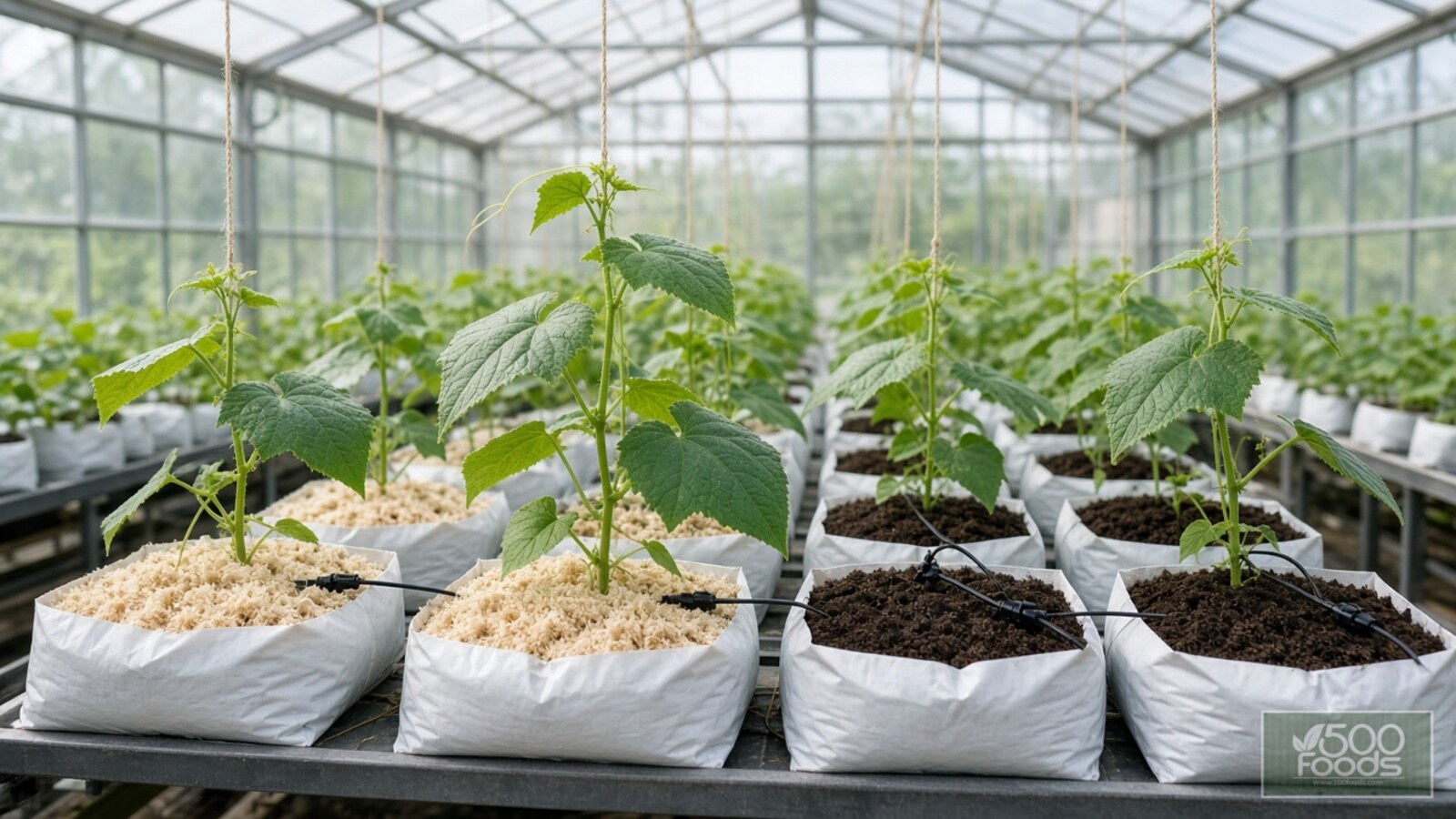
Peat has been the default growing medium in greenhouses for decades. It is also dug from bogs that store large amounts of carbon, and pressure to cut its use keeps growing. A Norwegian research team has now tested whether wood from local spruce and pine forests can take its place in cucumber production. The short answer is yes, possibly, but only if growers change how they feed the crop.
Not all wood is equal
The work is led by Dr Suthaparan Aruppillai at the Norwegian University of Life Sciences (NMBU) as part of a project called PeatFree. In the first greenhouse trials, the team grew cucumbers in commercial peat, in wood fibre made from spruce or pine, and in spruce bark. Each material was tested alone and in half-and-half blends. Plants were watered by hand once a day.
Peat on its own and a peat and wood fibre blend gave the best plants. Bark on its own did the worst. The researchers stress that "wood-based" is not one category. Fibre and bark act very differently in a pot, so each product has to be judged on its own results.
Nitrogen is the catch
Later trials switched to automatic fertigation. Each plant got 420 mL of complete nutrient solution a day at an electrical conductivity (EC) of 3, split into six feeds. Some treatments also got extra nitrogen as ammonium nitrate.
The extra nitrogen made a clear difference, even for bark. Cucumbers in pure wood fibre with added nitrogen grew as tall, and made as many leaves, as plants in peat with no extra nitrogen. They still fell short in one key way: leaf area and leaf dry weight stayed lower than in peat.
Why does wood fibre need more nitrogen? One likely reason is that microbes breaking down the carbon-rich wood take up nitrogen for themselves, leaving less for the plant. The trials did not prove this, and the team is now studying other major nutrients to explain the smaller leaves.
What did not help
Watering more often was not a fix. With the same daily volume split into two, three or six feeds, growth did not change by a significant amount, though six feeds trended slightly better. A base fertiliser mixed into the substrate gave no gain when a full nutrient solution was supplied from sowing. Three clay additives, mixed in at 20 kg per cubic metre, also made no measurable difference under six daily feeds.
What it means for container growers
For anyone growing in bags, slabs or pots indoors, the lesson is simple: a new substrate needs a new feeding plan. Swapping peat for wood fibre while keeping the old fertigation recipe is likely to leave plants short of nitrogen. A small side-by-side trial, with leaf size and drain-water nitrogen checked each week, is a sensible first step before changing a whole house.
The NMBU team still has open questions. It wants to know why nitrogen gets locked up, whether the fibre keeps its structure through a long crop, and how well it buffers pH and nutrients. The answers will also matter for tomatoes, strawberries and potted plants. The project runs until 2027.
References:
- PeatFree project page, Norwegian University of Life Sciences (NMBU)
- Modified wood fibre as an environmentally friendly growing medium for professional horticulture (PeatFree), project 336233, Norwegian Agriculture Agency
How we find, write and illustrate these stories, and how you can share them: see Welcome to Container Culture.
AI-generated post text and image content are shared under CC BY 4.0.