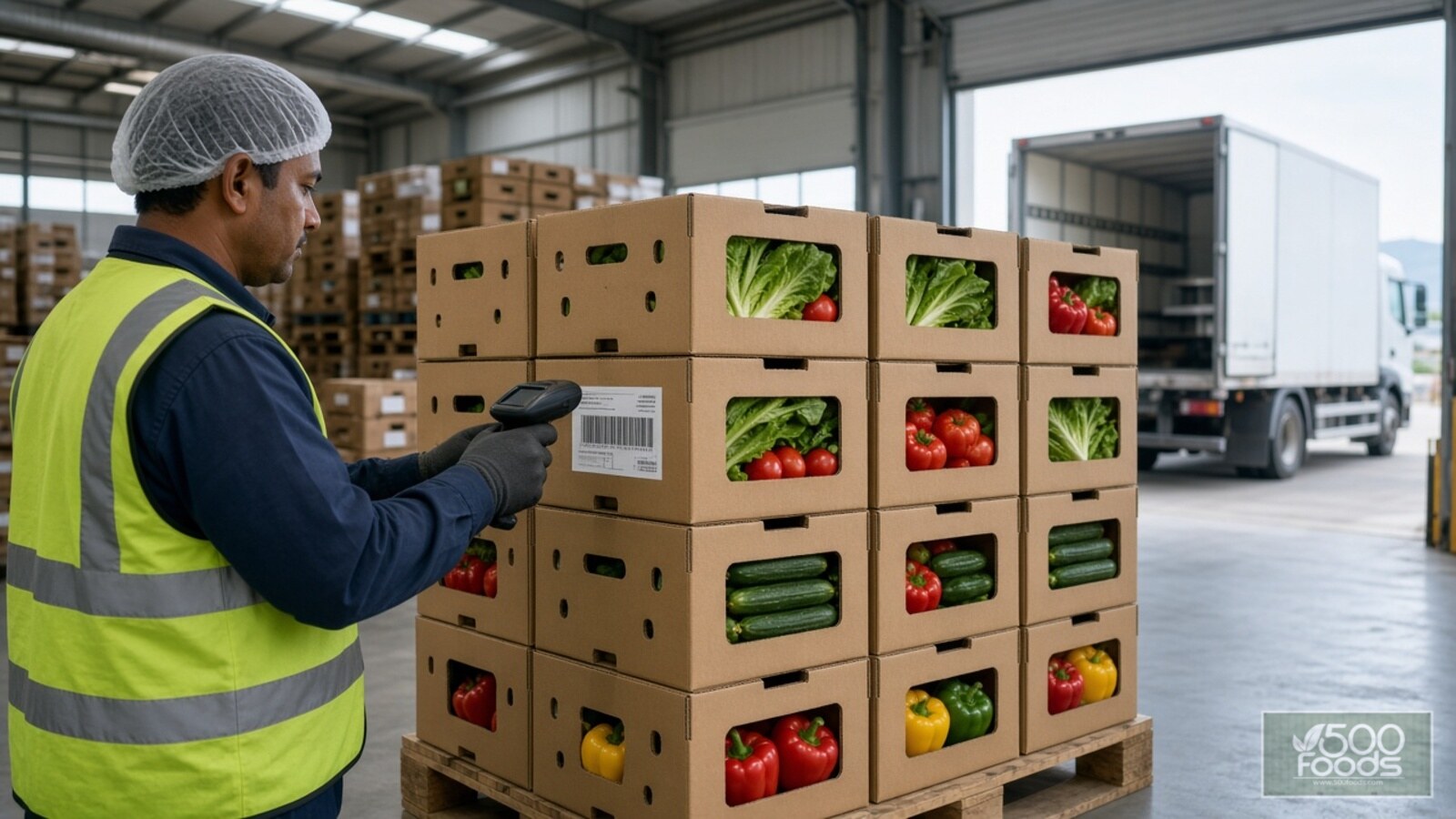
America's most ambitious produce traceability rule has been pushed back again. Federal law now bars the Food and Drug Administration from enforcing its Food Traceability Rule before 20 July 2028, two and a half years after the original January 2026 compliance date. The pause gives growers and packers more time, but it also raises a harder question: will the industry use those years to get ready, or simply wait?
What the rule asks for
The rule comes from Section 204 of the Food Safety Modernization Act, so it is often called FSMA 204. It applies to foods on the FDA's Food Traceability List, which includes leafy greens, tomatoes, cucumbers, peppers, melons and fresh-cut produce. Businesses that grow, pack, ship or receive these foods must record key data at specific steps, which the FDA calls critical tracking events. For produce, those steps include harvesting, cooling, initial packing, shipping and receiving.
At the centre of the system is the traceability lot code. A packer assigns the code when product is first packed, and every later record must carry the same code until the food is transformed. During an outbreak or recall, a covered business must be able to hand the FDA an electronic, sortable spreadsheet within 24 hours. In theory, that turns a weeks-long paper chase into a quick search.
Why enforcement was delayed
The FDA first proposed a 30-month extension in August 2025. Congress then wrote the same date into a November 2025 appropriations law, which directed the agency not to enforce the rule before July 2028 and to meet regularly with farms, restaurants, retailers and warehouses to look for flexibility. Industry groups had warned that small suppliers, restaurants and distribution centres were not ready. A January 2026 report from the Government Accountability Office also found that the FDA had not finished building its own internal traceability data system.
The next step is a virtual FDA public meeting on 6 November. It will cover lot-code management, tracking through distribution centres, product returns, transfers between a company's own sites and data standards. People who want to speak must register by 26 October, and written comments are due by 6 December.
The case for not waiting
The delay arrives just after one of the largest produce outbreaks in recent memory. Cyclospora linked to shredded iceberg lettuce from central Mexico sickened 12,883 people in 21 states, with 570 hospitalisations and two deaths. Investigators traced the lettuce to a single processor within days, yet consumer and public-health groups argue that consistent lot-level records across the whole chain would make such traceback faster and recalls narrower. They have asked Congress to lift the enforcement pause.
Large buyers are not waiting either. Walmart, Kroger and Albertsons built their own traceability programmes before the delay, and suppliers that sell to them may find that customer contracts, not federal inspectors, set the real deadline. For smaller growers, the extra time is best treated as a runway: map which products are on the list, choose a simple lot-code format, confirm what data partners will send and receive, and test whether a sortable spreadsheet can be produced in a day. Those steps cost far less now than in a rush in 2028, and they can also help a farm answer the next recall call with confidence.
References:
- FSMA Final Rule on Requirements for Additional Traceability Records for Certain Foods, US Food and Drug Administration
- Challenges and Solutions in Lot-Level Food Traceability; Public Meeting, Federal Register (2026-10-09)
- Investigation of Multistate Outbreak of Cyclospora Illnesses: Iceberg Lettuce (July 2026), US Food and Drug Administration
- Cyclospora Outbreak, July 2026: Final Update, US Centers for Disease Control and Prevention
How we find, write and illustrate these stories, and how you can share them: see Welcome to Ag Articles.
AI-generated post text and image content are shared under CC BY 4.0.