This post summarises an opinion piece. It was published by Ag Daily as a "Viewpoint", and the views in it are the author's own.
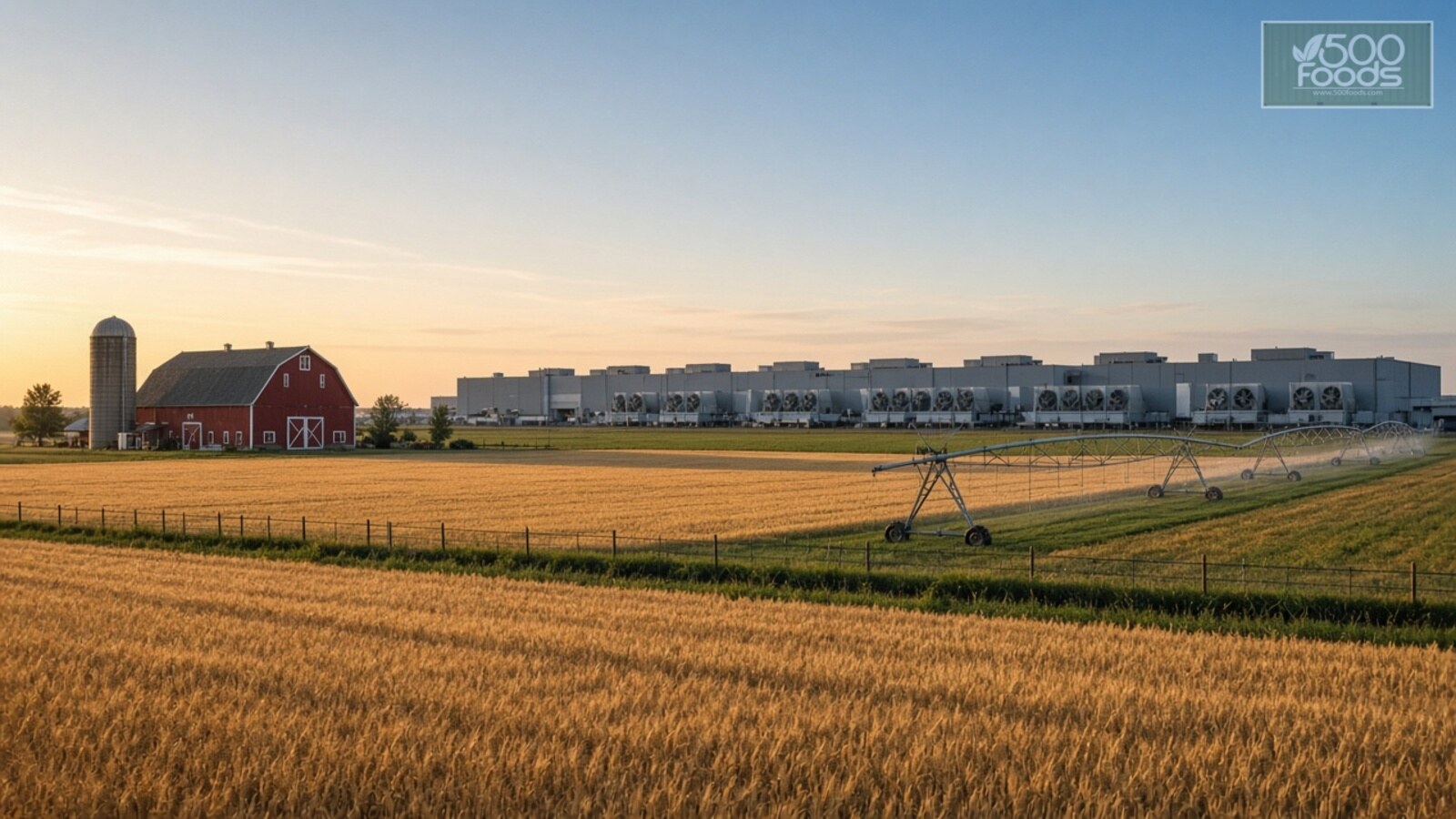
As AI data centres spread beyond cities, rural communities are debating what the new campuses mean for land and water. In a Viewpoint column for Ag Daily, Kansas rancher and agricultural speaker Brandi Buzzard lays out the case against them. She is open about where she stands: she opposes data centres near her own county and speaks out against them online. Here is an overview of what the column argues.
Starting with a rumour she rejects
The column opens with a claim circulating on social media and repeated by a Texas political candidate: that a rancher near a new data centre had gone almost two years without a live calf. Buzzard declines to back it. She notes that no ranch, data or veterinary opinion was offered and no third party has verified it, and she says she does not want to spread misinformation, even in support of a position she holds. The rest of the piece turns to concerns she considers better grounded.
Land
Citing industry and conservation figures, the column says the United States has more than 5,000 data centres in operation or development, led by Virginia and Texas. It cites a report that most existing centres are urban, while about two-thirds of planned ones are headed for rural areas, mostly in the South and Midwest. It also cites a National Wildlife Federation projection that data centre land needs could triple within five years.
Buzzard's concern is competition for farmland. She writes that in Virginia, developers can pay far more per acre than farmers, which makes it harder for young producers to get started. Large AI campuses can cover hundreds or thousands of acres. She links this to the large transfer of farmland expected between generations over the next 10 to 20 years, arguing that some of that land may not stay in agriculture.
Water
Water is the column's main focus. Many large data centres use evaporative cooling, which draws water continuously. The piece gives figures of about 110 million gallons a year for a medium-sized centre and up to 5 million gallons a day for a hyperscale or AI campus, which it compares to a city of 50,000 people. Buzzard argues that evaporated water may not come back to the same watershed. She adds that, unlike households, data centres have little ability to cut use during a drought. She also points to estimates that about a quarter of data centres sit in water-stressed areas, and names West Texas as a likely growth region.
Public opinion and pushback
The column cites polling that it says shows most Americans oppose new data centre development. It also cites reports of large amounts of planned investment being cancelled or blocked this year, and of states moving to restrict permits. It ends by encouraging rural readers to keep pushing back.
Reading it in context
This is advocacy, not a research study. The figures come from outside sources the author cites, and they vary widely from site to site depending on cooling design, climate and power source. Developers and some local governments point to tax revenue, jobs and newer closed-loop or air-cooled designs that use far less water. For growers and others in the produce business, the column is a useful look at how the debate is being framed in farm country as data centre siting decisions reach rural counties.
References:
- Viewpoint: AI data centers are putting America's farmland and water at risk, Brandi Buzzard, Ag Daily (28 October 2026), opinion
How we find, write and illustrate these stories, and how you can share them: see Welcome to Ag Articles.
AI-generated post text and image content are shared under CC BY 4.0.