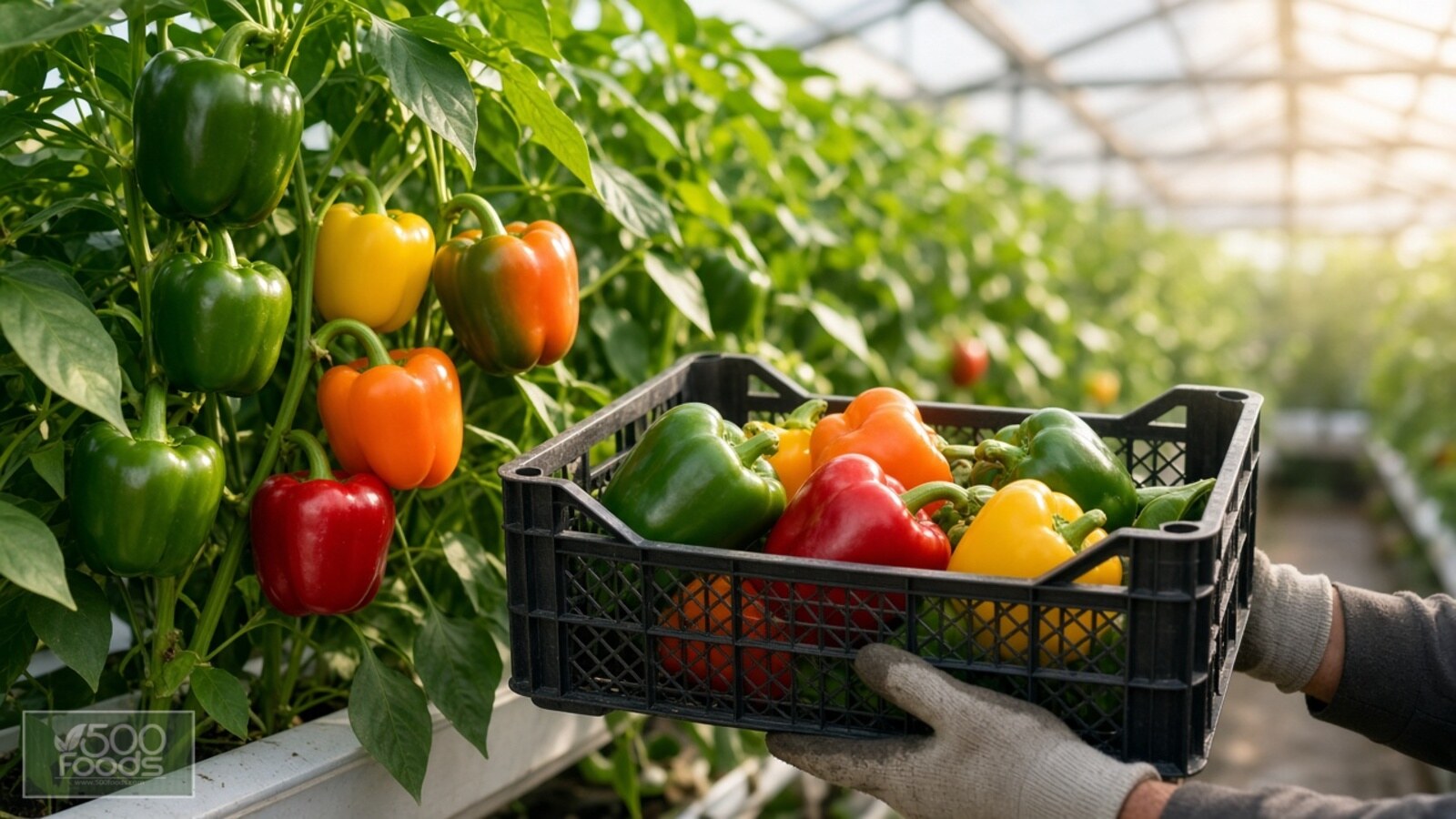
Shoppers often treat green, yellow, orange and red bell peppers as four different vegetables. In most cases they are the same fruit, picked at different points on the road to ripeness. A recent explainer by nutrition researchers at the University of Wollongong in Australia shows why that timing matters for flavour, nutrition and the price on the shelf.
A fruit that changes as it ripens
Bell peppers, also called capsicums or sweet peppers, belong to the nightshade family with tomatoes and eggplants. Botanically they are berries, since they grow from a flower and carry seeds. Unlike chilli peppers, they contain no capsaicin, the compound that makes hot peppers burn, which is why they taste mild.
Every bell pepper starts out green because its skin is packed with chlorophyll, the pigment plants use for photosynthesis. As the fruit matures, chlorophyll breaks down and carotenoids take over, turning the skin yellow, then orange and finally red. A popular kitchen myth says peppers with four bumps on the bottom are "female" and sweeter than three-bumped "males". The researchers point out that fruits have no sex, and the number of lobes, usually two to five, depends on plant genetics, not flavour.
Time on the plant shapes taste
Green peppers can be harvested roughly eight weeks after planting. Because they are unripe, they are firm, crunchy and slightly bitter. Yellow fruit is typically picked about two weeks later and orange about three weeks later; both are mild and sweet. Red peppers hang on the plant around four weeks longer than green ones, so they are the softest when cooked and the sweetest.
Different colours, different nutrients
All bell peppers supply fibre, vitamin C and antioxidants such as flavonoids and carotenoids. The balance changes with colour. Green, yellow and orange fruit are rich in lutein, zeaxanthin and violaxanthin, carotenoids linked to eye health. Orange and red peppers carry the most vitamin C and beta-carotene, which the body turns into vitamin A. Red peppers also hold the most capsanthin, the carotenoid with the strongest antioxidant activity. Cooking makes carotenoids and polyphenols easier to absorb but destroys some vitamin C, so eating a mix of raw and cooked peppers gives the widest benefit.
What it means for growers
Colour is a business decision as much as a biological one. Every extra week a fruit stays on the plant ties up space, water, labour and climate control, and it adds risk from pests, disease and cracking. That helps explain why green peppers are usually the cheapest to grow and buy. Red takes the longest, yet yellow is often the priciest, because yellow cultivars can be harder to grow and have a shorter window for picking. Choosing which colours to grow means weighing yield, labour and market premiums.
The researchers also make a case for "imperfect" fruit. Two-toned peppers, part green and part orange, simply caught mid-ripening, actually provide a broader mix of carotenoids, and misshapen peppers taste just as good. Selling these as value lines could cut waste on farms and give budget-minded shoppers a nutritious option.
References:
- What's the difference between green, yellow and red capsicums? It's more than what you see, The Conversation (Theresa Larkin and Megan Hammersley, University of Wollongong)
- What's the difference between green, yellow and red capsicums?, University of Wollongong
- Produce Spotlight: Bell Peppers, UMass Amherst Center for Agriculture, Food, and the Environment
How we find, write and illustrate these stories, and how you can share them: see Welcome to Ag Articles.
AI-generated post text and image content are shared under CC BY 4.0.