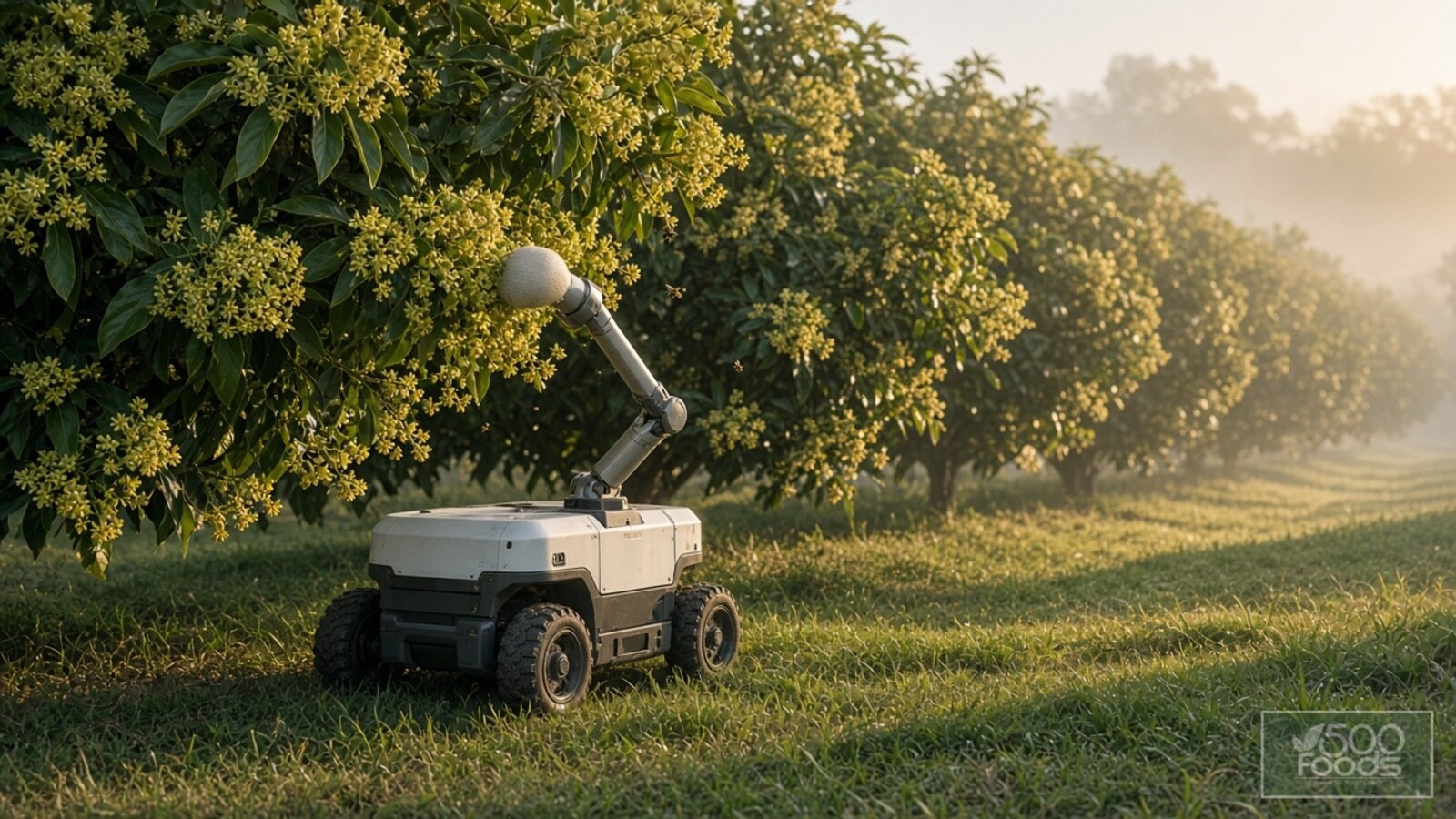
Israeli start-up BloomX has raised $13 million to grow its robotic pollination service for avocado and blueberry orchards. Its machines work alongside bees rather than replacing them. Growers pay per service instead of buying equipment. The company reports average yield gains of about 20%, but it hasn't published how it measured them.
Pollination is one of the few steps in fruit growing that most farms leave almost entirely to chance. A cold snap, rain, wind or a weak hive during bloom can cut fruit set, and there is little a grower can do about it in the moment. BloomX, founded in Israel in 2019, is betting that machines can narrow that gap. Future Farming reports that the company has closed a $13 million Series A round led by Elah Fund, with the Israel Innovation Authority among the backers. That brings its total funding to about $20 million.
Two machines, two tricks
- Robee (blueberries) imitates "buzz pollination", the rapid vibration bumblebees use to shake pollen loose from blueberry flowers. The machine delivers controlled vibrations to the blossoms so the anthers release pollen.
- Yahav 2400 (avocados), launched commercially in 2026, uses a high-voltage electric field to lift pollen from male-stage flowers onto a textile designed to behave like a bee's hairy body. It then carries that pollen to flowers in their receptive female stage. Avocado flowers open in two separate sexes at different times of day, which makes this transfer difficult.
Both systems use AI-based software to help decide when and where to work. According to the company, one operator can cover up to about 3.5 hectares a day, and the machines can run in weather that keeps bees in the hive.
A service, not a purchase
BloomX doesn't sell the machines. Growers buy "pollination as a service", which avoids a large equipment purchase but leaves the per-hectare price undisclosed. The company already works in Peru, Mexico, South Africa and Israel, and names growers such as Agrovision, Allesbeste and the Granot Group as customers. The new money is meant to deepen those markets and prepare for the United States, including trials in almonds.
Read the yield numbers carefully
BloomX says its customers see average yield increases of about 20%, plus bigger, better fruit and returns of up to 10.5 times the cost. Those are company figures. No trial design, comparison plots or time frame have been published, and no independent study has confirmed them, so treat them as a sales claim for now.
What it means for smaller farms
For organic and other independent fruit growers, the appeal is a tool that adds to the bees rather than replacing them, with no chemicals involved and no machine to buy. The open questions are cost per hectare, whether service crews will reach smaller orchards, and whether the gains hold up in independent trials. Until those answers arrive, the most practical pollination steps are still good hive placement, flowering hedgerows and habitat that keeps wild pollinators nearby. Assisted pollination may become a useful backup during a bad bloom.
How we find, write and illustrate these stories, and how you can share them: see Welcome to Better Than Organic. Text and AI-generated images are shared under CC BY 4.0.