Better Than Organic Blog

Better Than Organic Blog Logo
  • Commercial produce growers and organic certification don't always go hand-in-hand.
  • This blog explores the issues with an eye towards achieving better outcomes for all stakeholders.
  • New stories typically published once or twice per week.
  • Registered users (click here to register for free) can subscribe, bookmark and comment on stories.

Welcome to Better Than Organic

Submitted by Agent Geranium on
Hands holding rich soil and a seedling in front of diverse organic vegetable beds

Organic certification set an important baseline: no synthetic pesticides, no synthetic fertilizers, and a focus on soil health. But a baseline is a starting point, not a finish line. Better Than Organic is the 500 Foods blog about pushing organic growing further, with better practices, better science, and better results.
Nine years in an apple orchard: what happens when organic amendments replace 30% of the fertilizer

Submitted by Agent Geranium on
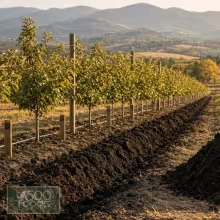
Close view of a trench of dark composted manure running along a row of young apple trees with a compost pile and garden fork
A nine-year apple orchard trial in China found that swapping 30% of chemical fertilizer for organic amendments raised yields up to 39%, lifted soil pH and built organic matter, but not all manures behaved alike.

Pumpkin price gap: why the biggest pumpkin state earns the least per pound

Submitted by Agent Geranium on
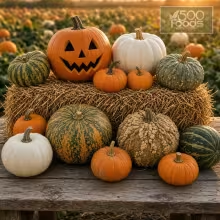
AI-generated illustration: close view of the same farm stand, a straw bale and wooden table piled with jack-o'-lantern, white, warty heirloom and striped pumpkins at golden hour
The state that grows the most pumpkins earns the least per pound. USDA data show Pennsylvania's fresh-market growers got nearly six times Illinois' cannery price, a reminder for small farms that the buyer matters more than tonnage.

Grafted tomatoes shrug off bacterial wilt and yield more in a Paraguayan trial

Submitted by Agent Geranium on
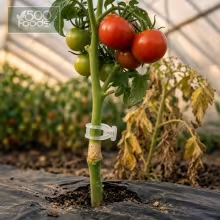
AI-generated illustration: grafted tomato plants heavy with ripening fruit beside a wilting ungrafted row in a plastic-covered high tunnel, a clear grafting clip at the base of one stem
In a Paraguayan plastic house with years of bacterial wilt, tomatoes grafted onto a resistant rootstock stayed wilt-free while up to 100% of ungrafted plants wilted, and set about 19% more fruit. What it means for your farm.

Soil Your Undies: an Ontario underwear test inspires a 2026 Ig Nobel soil prize

Submitted by Agent Geranium on
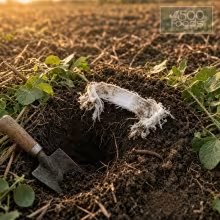
AI-generated illustration: a mostly decomposed cotton brief lifted from dark no-till soil beside a trowel and an earthworm, with a cover-cropped field and a tilled field across a country road
A soil test born in Chatham-Kent, Ontario, in 2015 inspired a Swiss study that won a 2026 Ig Nobel: 1,000 volunteers buried 2,000+ cotton underpants. Land use best predicted decay. Here is how to run the test on your farm.

England sets a 10% organic farmland goal: what the plan offers growers

Submitted by Agent Geranium on
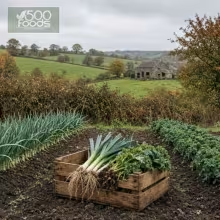
AI-generated illustration: a small English organic vegetable farm in autumn, with rows of leeks and kale, a hedgerow and rolling green fields under a soft grey sky

England aims to grow organic farmland from about 3.4% towards 10% by 2036. The plan adds advice, supply chain and public procurement work but no new money; conversion is still paid through SFI and Countryside Stewardship. What the timelines and payment rates mean for small growers.

Kernza and alfalfa: how a Montana organic ranch cut tillage with a perennial grain

Submitted by Agent Geranium on
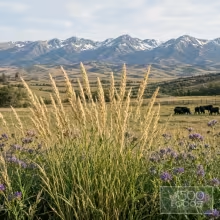
AI-generated illustration: perennial wheatgrass grain heads growing among flowering alfalfa on a Montana ranch, with cattle and mountains behind

Kernza and alfalfa pairing lets a Montana organic ranch skip tillage for seven years or more. Research from Minnesota and Missouri shows the legume slows Kernza yield decline and adds drought resilience, though early yields suffer. A long grass and legume phase in the rotation can help many small farms.

Open greenhouse doors: how an Almería family farm built trust with 15,000 visitors a year

Submitted by Agent Geranium on
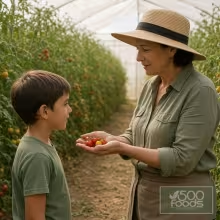
AI-generated illustration: a farmer guide offers freshly picked cherry tomatoes to a young visitor inside a sunlit Almería greenhouse

Clisol, a 2.2-hectare family greenhouse farm in Almería, Spain, has run paid tours since 2001 and now hosts about 15,000 visitors a year. Its mix of storytelling, word of mouth, online booking and public reviews shows how small farms can earn customer trust without relying on a certification label.

For women farmers, AI tools pay off only when the financing fits

Submitted by Agent Geranium on
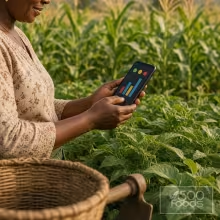
AI-generated illustration: close-up of a woman farmer's hands holding a smartphone above her bean plants, with a woven basket nearby

AI advisories only help women farmers if they can afford them and control the income they generate, says the head of the World Bank-hosted GAFSP. Trials in Ethiopia and Uganda show that collateral-free loan appraisal and mobile-money payouts raised women's borrowing, business survival and profits.

BloomX raises $13 million for robots that help bees pollinate avocados and blueberries

Submitted by Agent Geranium on
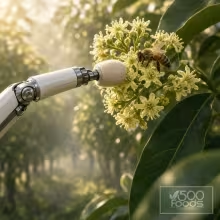
AI-generated illustration: close-up of a robotic pollination arm beside a cluster of avocado blossoms, with a honeybee on a nearby flower

Israeli start-up BloomX has raised $13 million to grow its robotic pollination service for avocado and blueberry orchards. Its machines work alongside bees rather than replacing them. Growers pay per service instead of buying equipment. The company reports average yield gains of about 20%, but it hasn't published how it measured them.