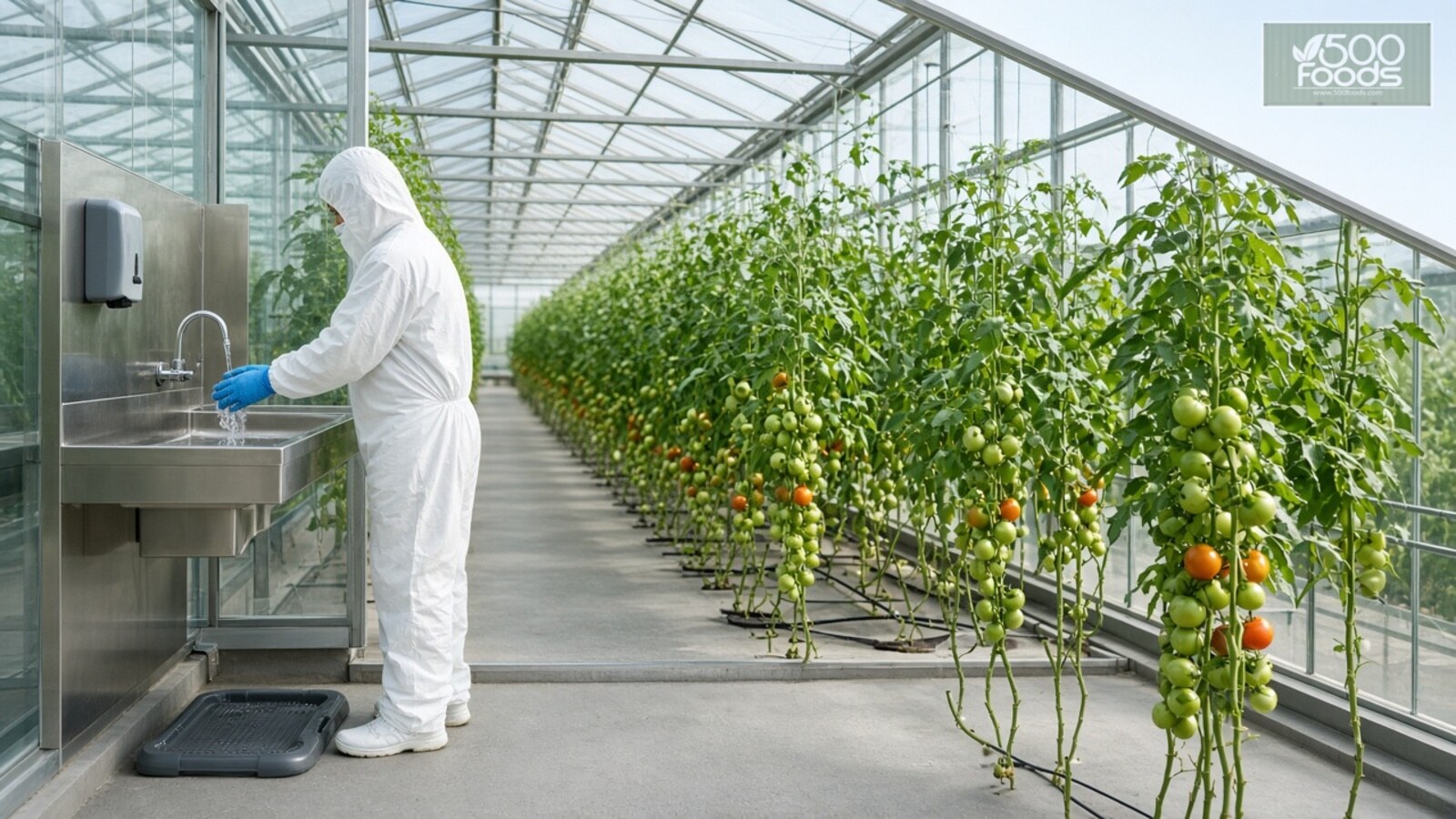
Tomato brown rugose fruit virus (ToBRFV) can make tomato and pepper crops unsellable, and it spreads easily on hands, tools and equipment while surviving for months on surfaces. We look at how the virus moves, the hygiene and heat-treatment steps that keep it out, and the resistant tomato varieties now reaching the market.
For tomato and pepper growers, few threats are as stubborn as tomato brown rugose fruit virus, usually shortened to ToBRFV. It was first described in the Middle East in 2015 and has since turned up in greenhouses across Europe, the Americas and Asia. It doesn't kill plants outright. Instead, it quietly wrecks the crop's value, and once it gets into a facility it is very hard to get out.
What the virus does
ToBRFV is a tobamovirus, from the same family as tobacco mosaic virus. Infected plants can show mottled or mosaic leaves, narrow or puckered new growth and yellowing. The fruit is the costly part: rough brown wrinkled patches, yellow blotches and uneven ripening that make tomatoes and peppers hard or impossible to sell. Symptoms vary by variety and conditions, and some plants carry the virus while looking fairly normal. That makes early detection hard.
How it spreads
The virus has no insect vector to blame. It moves mostly by contact. Hands, gloves, clothing, pruning knives, carts, trays and irrigation equipment all carry it from plant to plant during routine work such as pruning, deleafing, clipping and harvesting. It enters through tiny wounds. Bumblebees used for pollination can also move it within a crop.
Its toughness is what sets it apart. UK government research found the virus stayed infectious on surfaces such as concrete, steel, glass and plastic for one to three months, sometimes longer, and on skin and gloves for hours. Ordinary handwashing removes it only partly. The virus can also ride on the seed coat and survive in plant debris and growing media, so infected seed, transplants and leftover crop waste are all ways in.
The control toolkit
There is no chemical cure for infected plants. Control comes down to keeping the virus out and containing it fast if it arrives. Guidance from the USDA and other plant health agencies centres on a few habits:
- Start clean. Buy seed, seedlings and grafting material certified or tested free of the virus, and ask suppliers how they test.
- Treat each house as its own unit. Limit visitors, use dedicated or disposable clothing and gloves per area, and keep tools from travelling between zones.
- Disinfect with products shown to work. Footbaths and mats at entrances, frequent tool dips and regular cleaning of carts and benches matter. Agencies list specific disinfectants and contact times, because many common cleaners do little against this virus.
- Use heat where you can. Steam treatment of trays, pots and substrate between crops is one of the more reliable ways to break the cycle, and it is the approach behind the HortiDaily piece that prompted this post.
- Handle waste carefully. Infected plants, debris and media should be heat-treated, deep-buried or otherwise disposed of according to local rules, never left near production areas.
- Report suspicious symptoms. In many regions ToBRFV is a regulated pest, so confirmed cases may trigger official requirements.
Resistant varieties are arriving
For years the standard tomato resistance gene against tobamoviruses, Tm-2², gave no protection against ToBRFV. Breeders have since found new sources of resistance. Several major seed companies now sell tomato varieties labelled with high or intermediate resistance. Peppers carrying certain established L resistance genes appear to hold up well too.
Resistance is a strong tool, but it isn't a substitute for hygiene. Intermediate resistance can still allow some infection, and resistant plants may carry the virus to others. For growers, packers and buyers alike, the lesson is the same: a clean supply chain from seed to shipping is the best protection against a very persistent virus.
Sources: Reducing the risk of Brown Rugose Fruit Virus in tomatoes and peppers, found via the HortiDaily feeds.
How we find, write and illustrate these stories, and how you can share them: see Welcome to Ag Articles. Text and AI-generated images are shared under CC BY 4.0.